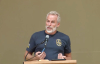
Armenian Prime Minister Nikol Pashinyan, who has faced growing criticism from human rights organizations over his government’s treatment of senior clergy from the national church, addressed the country’s first national prayer breakfast on Saturday.
Pashinyan, who came to power in 2018 following a wave of anti-government protests, told attendees at the inaugural Republic of Armenia Prayer Breakfast that 2025 marked a significant milestone in the nation’s history — the establishment of peace for the first time since Armenia’s independence in 1991.
He highlighted the Aug. 8 peace agreement and memorandum of understanding signed with Azerbaijan at the White House, noting that it occurred between his participation at the National Prayer Breakfast in Washington in February and Armenia’s own inaugural gathering, which he described as spiritually meaningful.
During his address, Pashinyan recited Psalm 32:1 and reflected on the importance of the relationship between God and the state.
Among the international guests was Jim Garlow, former senior pastor of Skyline Church in Southern California, who praised Pashinyan for quoting the entire passage from memory in Armenian.
“I have been with 13 Heads of State over the past few years, but this is the FIRST time I have ever heard a Head of State quote by memory an entire chapter of the Bible,” Garlow wrote on Facebook, calling it “powerful.”
Mervin Thomas, president of the U.K.-based watchdog Christian Solidarity Worldwide (CSW), also described Pashinyan as “an inspiration” for his public recitation of scripture.
Other speakers included Rev. Botrus Mansour, General Secretary of the World Evangelical Alliance, as well as leaders from the Anglican Church in Armenia and Catholic bishops. Also in attendance were Vicky Hartzler, chair of the U.S. Commission on International Religious Freedom (USCIRF), and Dr. Asif Mahmood, its vice chair.
The two-day event, held in Yerevan on Friday and Saturday, brought together more than 300 participants from Armenia and abroad, including Christian, Jewish, Muslim, Yezidi, and Assyrian leaders. Armenian President Vahagn Khachaturyan attended the first day’s session.
Organizers said the event was conceived by Armenian civil society groups to foster reconciliation, cooperation, and dialogue rooted in the nation’s Christian identity.
Stepan Sargsyan, chair of the organizing committee, emphasized that it was not a government-sponsored event but a spiritual initiative intended to “look forward in faith and prayer.” The participation of multiple Christian denominations, he added, represented a shared moral vision.
However, Pashinyan’s participation drew criticism in advance of the event due to ongoing tensions with the Armenian Apostolic Church and the government’s arrest of several senior clergy, which has drawn international attention.
Relations between Pashinyan’s administration and church leadership have deteriorated sharply this year, as authorities detained at least three archbishops on coup-related charges.
In September, Archbishop Mikael Ajapahyan was sentenced to two years in prison for calling for the government’s overthrow. His conviction followed the June arrest of Archbishop Bagrat Galstanyan, who led an opposition movement called Sacred Struggle.
Galstanyan, who oversaw a diocese along Armenia’s border affected by recent territorial concessions to Azerbaijan, was detained along with 13 others accused of plotting a coup. Last month, Bishop Mkrtich Proshyan of the Diocese of Aragatsotn and 12 clergy were also arrested.
Following the prayer breakfast, the Switzerland-based Christian Solidarity International (CSI) accused Armenia’s government of preventing its representatives from visiting four detained church leaders and more than two dozen imprisoned supporters.
Joel Veldkamp, CSI’s Director of Public Advocacy, said the organization had requested permission to assess the detainees’ conditions, review legal charges, and meet with their families and attorneys.
The imprisoned clergymen include Galstanyan, Ajapahyan, Proshyan, and Father Garegin Arsenyan, while businessman Samvel Karapetyan and 22 other church supporters have also been detained.
Veldkamp asserted that the case against Galstanyan and his fellow detainees appeared to rely on falsified evidence and described Archbishop Ajapahyan’s prosecution as politically motivated. “This is a clear sign of political interference,” he said.
Dr. Asif Mahmood, USCIRF vice chair and longtime ally of Armenia, told The Christian Post that he found the arrests “concerning.”
“When I heard that clergy had been arrested, the first thing that comes to anyone's mind, especially people like me who are working day-in-and-day-out on religious freedom, that this is an encroachment of the Church and their voice has been shut,” Mahmood said.