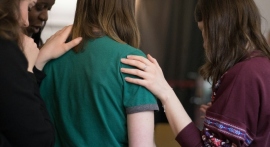
Lawmakers in Alabama are weighing legislation that would elevate the disruption of church services to a felony offense carrying a potential prison sentence of up to 10 years.
The Alabama House of Representatives is expected to take up House Bill 363, a proposal that would classify certain acts of interference during worship as a Class C felony under state law.
The measure states that a person “commits the crime of disruption of a worship service” if he or she “knowingly” enters a “church building with the intent to disrupt the worship service” and either “engages in an unlawful protest, riot, or disorderly conduct inside the church building” or “otherwise engages in harassment of any individual participant in the worship service; or obstructs the ingress or egress to the church building or church property.”
Under the proposed legislation, repeat offenders would face harsher penalties. If an individual receives “a second or subsequent violation, the individual shall be guilty of a Class C felony and shall serve a mandatory minimum of five years imprisonment.”
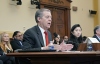
The bill, introduced last month by Republican state Rep. Greg Barnes, cleared a House committee last week and is now poised for consideration by the full chamber.
“No one has the right to disrupt a church service and infringe on their fellow citizens’ right to worship freely,” Barnes said, according to the Alabama Political Reporter.
“In Alabama, we are not going to sit by and allow crazy people to intimidate our women and children in our churches. We simply will not tolerate it.”
Supporters of the legislation say it was prompted by a recent protest at Cities Church of St. Paul, Minnesota, where demonstrators interrupted a worship service to object to one of the pastors’ alleged connection to a local U.S. Immigration and Customs Enforcement office.
Some have defended the protesters’ actions as protected under the First Amendment, while others argue the disruption may have violated the federal Freedom of Access to Clinic Entrances Act, which provides protections for houses of worship against physical intimidation.