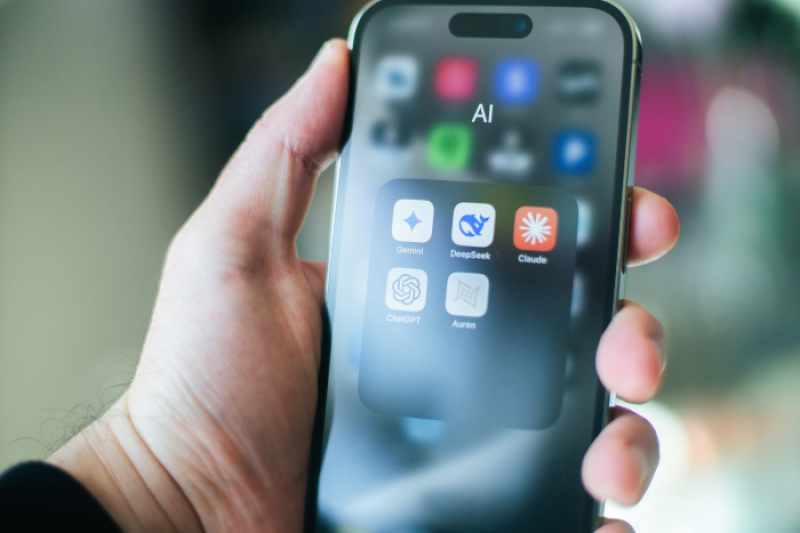
A new Barna Group study found that while many Christians and pastors are embracing artificial intelligence, they remain deeply concerned about its potential impact on faith and spiritual authority.
The findings, released last month by the Christian research organization in partnership with Gloo, draw from two surveys conducted under the State of the Church initiative. One survey gathered responses from 1,514 American adults in November 2025, while a separate study of 442 U.S. Protestant pastors was conducted the following month.
Researchers found that nearly half (48%) of practicing Christians trust AI to help them grow spiritually.
Confidence in the technology extended beyond faith-related matters. About 61% of respondents said they would trust AI to help improve their financial well-being, while 56% expressed confidence in its ability to support their mental and physical health.
Many participants also indicated that they would rely on AI to help them find happiness, better understand themselves, discover purpose and meaning, and cultivate stronger personal relationships. The study further found that practicing Christians generally displayed greater trust in AI than both pastors and non-practicing Christians.
Despite that openness, respondents voiced substantial concerns about AI’s expanding role in religious life, particularly regarding biblical interpretation and spiritual authority.
According to the survey, 83% of practicing Christians and 94% of pastors worry that AI could misinterpret Scripture. Similar concerns were shared by 74% of American adults overall.
Many respondents also expressed anxiety about AI’s influence on faith communities. Nearly two-thirds of pastors, or 63%, said they are concerned about AI replacing clergy, while that concern was shared by 72% of practicing Christians. Additionally, 73% of practicing Christians fear that increased reliance on AI could contribute to people losing their faith.
Reflecting on the findings, Barna Vice President of Research Daniel Copeland said the results reveal a striking tension in how Christians view the technology.
“This is where the data gets genuinely confounding,” Copeland stated. “Christians say they trust AI with spiritual growth, and a meaningful share say its spiritual guidance is as trustworthy as a pastor’s — yet large majorities are simultaneously concerned about AI misinterpreting scripture, replacing God, or undermining the role of spiritual leaders. The use case and the underlying fear are both present, and they’re pointing in different directions.”
The findings align with broader trends documented in “Technology for Missional Impact: State of Church Tech 2026,” another Barna study produced with Pushpay. That report found that roughly 60% of church leaders use AI for personal purposes at least several times each month, while only 24% reported never using the technology.
Researchers also pointed to findings from “The 2025 State of AI in the Church Survey Report,” released last December, which showed that although relatively few pastors believed AI would completely replace them, nearly two-thirds (65%) feared it could diminish their role as spiritual guides. Approximately 70% also expressed concern that AI could weaken trust between pastors and their congregations.