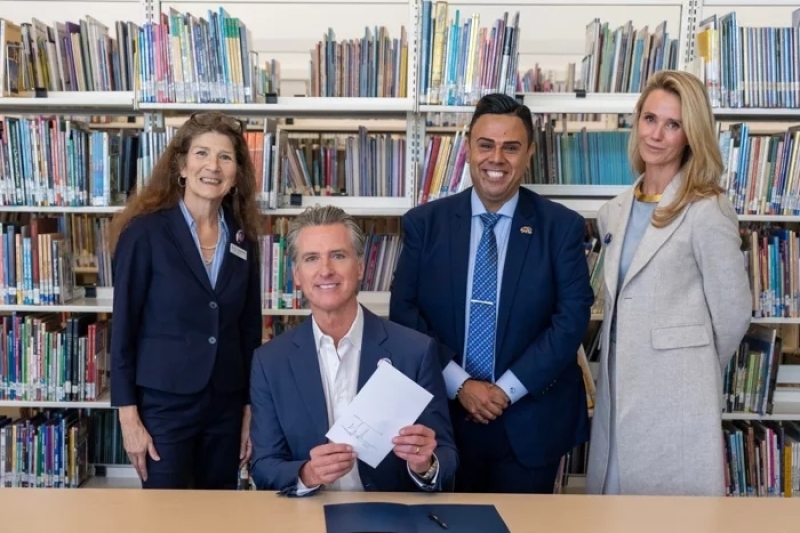
Gov. Gavin Newsom has signed AB 727 in honor of World Mental Health Day, requiring public middle schools, high schools, and colleges in California to print contact information for The Trevor Project on student ID cards.
Authored by Assemblymember Mark González, D–Los Angeles, the legislation expands the state’s 2018 suicide prevention ID card law by adding The Trevor Project’s hotline number to student IDs.
Supporters frame the measure as a direct lifeline for vulnerable students, particularly those who identify as gay, lesbian, and transgender. The Trevor Project, an LGBT activist group and suicide prevention organization whose online platform TrevorSpace has drawn scrutiny for age verification and moderation, is intended to provide immediate crisis support under the new law.
In announcing the bill’s enactment, Newsom said, “While some in Washington turn their backs on [LGBT-identified] youth, California is choosing compassion over cruelty. AB 727 makes it clear: your identity doesn’t disqualify you from care and community — it’s exactly why we are fighting to make it easier to reach.”
Opposition has emerged from parental rights advocates who warn that the new requirement could expose LGBT-identified youth to online predators. While acknowledging the bill’s mental health aims, critics argue it could unintentionally place children at risk.
Lawmakers describe The Trevor Project as the “leading suicide prevention and crisis intervention nonprofit organization” for LGBT-identified youth, but conservative groups have criticized the organization for providing LGBT propaganda curriculum for public schools.
According to the Christian Post, opponents point to an activity adopted by the Vista Unified School District in San Diego, where students were reportedly required to take part in a role-playing exercise called “Coming Out Stars.” The exercise instructed students to imagine “each of you is now gay or lesbian, and you are about to begin your coming out process.”
Much of the concern centers on TrevorSpace, described as a welcoming online social community for [LGBT-identified] young people between the ages of 13-24 years old.
Critics—including the California Family Council (CFC), law enforcement, and educators—contend that limited moderation and insufficient age checks on the platform create opportunities for exploitation.
Brenda Lebsack, a trustee with the Santa Ana Unified School District, says parents have labeled TrevorSpace a “pedophile’s paradise,” recounting that she posed as a 13-year-old and accessed groups such as “the Gay Men’s Club – Let’s Talk about Boys” and “The Witchcraft Club” without verification.
“I saw with my own eyes that Trevor Project is putting kids in harm’s way through TrevorSpace by connecting minors with unfettered random adults on an international virtual platform to explore their genders and sexualities, and this is dangerous for our most vulnerable kids who identify as [LGBT-identified],” Lebsack warned in a recent Interfaith 4 Kids article.