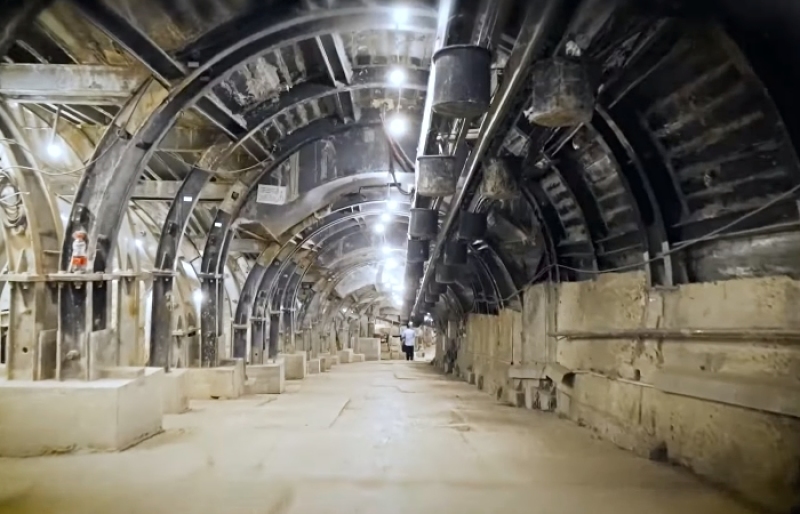
A 2,000-year-old roadway believed to date to the time of Jesus has officially been opened to the public, allowing visitors to walk a historic route that once connected the Pool of Siloam to the Temple Mount in Jerusalem.
Commonly referred to as the “Pilgrim’s Path,” the stone-paved street is thought to have been commissioned during the rule of King Herod or the Roman governor Pontius Pilate. Archaeologists have spent approximately 20 years uncovering the route, which lies beneath a largely Palestinian residential area.
Excavations along the path have yielded significant discoveries, including a Jewish ritual bath and a raised stone platform that researchers believe may have served as a place for public proclamations or the reading of Scripture. Many of the artifacts and structural elements remain well-preserved.
Scholars note that Jerusalem’s destruction by the Romans in 70 AD ultimately prevented prolonged wear on the roadway, contributing to its condition.
The extensive underground excavation has sparked objections from some Palestinian residents, who argue that digging beneath their homes could threaten the structural integrity of the buildings above. In response to those concerns, engineers constructed a reinforced tunnel system of concrete and metal to help stabilize the area and protect existing structures.
Additional criticism has centered on the site’s location in east Jerusalem, a territory claimed by both Israelis and Palestinians and long considered politically sensitive.
Despite ongoing debate surrounding the project, the newly opened route is now drawing visitors, including both Jews and Christians eager to explore the historic site.