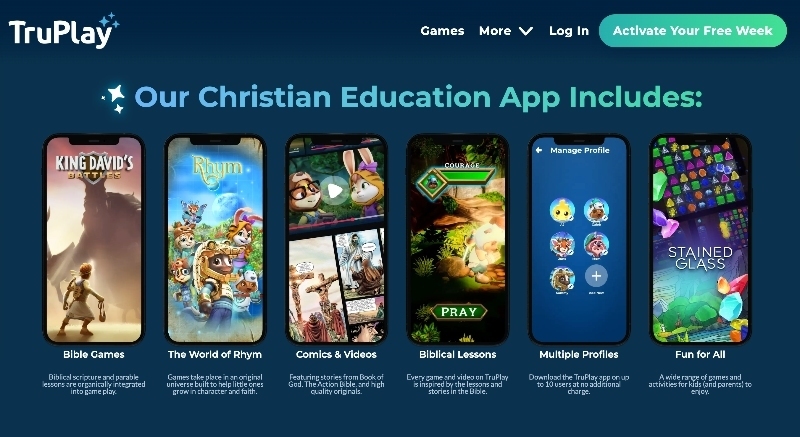
TruPlay Games, a Christian digital media firm known for producing Bible-based video games and educational entertainment, has accused Google and TikTok of systematically restricting Christian content and is calling on Congress to intervene.
In a five-page letter sent Wednesday to House Judiciary Committee Chairman Jim Jordan, attorneys from the American Center for Law & Justice, which represents TruPlay, alleged that Google has rejected dozens of the company’s advertisements since 2023 under a policy labeled “Religious belief in personalized advertising.”
“In practice, however, Google applies its ‘Religious belief in personalized advertising’ policy to reject advertisements because they contain religious content, regardless of how the audience is targeted,” ACLJ Executive Director Jordan Sekulow wrote, along with senior associate counsel Nathan J. Moelker and government affairs director Mark Kelly.
According to the letter, TruPlay’s advertising does not target users based on religious belief but instead promotes Christian-themed games to broad audiences interested in family entertainment, children’s education and mobile gaming.
“TruPlay’s ads do not target audiences based on religious belief — they advertise Christian gaming content to general audiences interested in family entertainment, children’s education, and mobile gaming,” the attorneys stated.
The ACLJ said Google rejected ads with phrases such as “Turn Game Time Into God Time,” “Christian Games for Kids,” and “Safe Bible Games for Kids.”
“These ads target general demographics (parents, families with children, mobile game users) and geographic regions — not audiences selected based on religious belief. Yet, Google has continued to reject them under the religious belief policy,” the letter said.
“TruPlay’s campaigns do not use religious status as a targeting criterion. This suggests Google interprets ‘personalized advertising’ so broadly that virtually any advertising for ‘religious products or topics’ is prohibited, regardless of whether religious groups are targeted at all,” the attorneys added. “If this interpretation is correct, then Google’s policy effectively bars practically all advertising for religious content, while the policy language suggests only audience-religion-based targeting is restricted.”
The letter also accused TikTok of similar conduct, alleging the platform permanently suspended TruPlay’s advertising account for “repeated violations” of its policies.
“TikTok even refused to allow TruPlay to run ads if TruPlay included a cartoon image of Jesus on the cross as one of the Apple App Store preview pictures, regardless of the content of any particular advertisement,” the ACLJ wrote. “Simply having a picture of Jesus was enough to ban advertisements.”
After multiple rejections, the company said TikTok escalated enforcement by permanently suspending TruPlay’s advertising account.
“This is repeated behavior in the dozens,” TruPlay CEO Brent Dusing told FOX Business. “We would get rejections multiple times a week.”
The ACLJ has asked the House Judiciary Committee to investigate Google and TikTok, arguing that congressional oversight is needed to ensure equal access to digital advertising platforms and prevent viewpoint-based discrimination against religious content.